
Improve Your Software Skills With Lynda.com
.jpg) In today’s high-tech work environment you may find yourself pushed to learn how to use new software in order to take on a new role or responsibility. Sometimes you may find yourself forced into using software that you have never heard of, let alone used. Maybe it’s not even the case that it’s new software; rather, you get forced into using the same old application in a way that surpasses your technical capabilities. If you are like me, you may just want to master a new application for fun as well as for the potential work benefits.
In today’s high-tech work environment you may find yourself pushed to learn how to use new software in order to take on a new role or responsibility. Sometimes you may find yourself forced into using software that you have never heard of, let alone used. Maybe it’s not even the case that it’s new software; rather, you get forced into using the same old application in a way that surpasses your technical capabilities. If you are like me, you may just want to master a new application for fun as well as for the potential work benefits.
.jpg) At the Institute of Legal Secretaries and PAs, we have used our journal to report back on the effects of employment law on economic recovery in the past. We discussed the possibility that some businesses were struggling to cope with the financial burden that such legal regulations impose upon them, and how this may have led to a sharp increase in the number of employment tribunals that were being pursued.
At the Institute of Legal Secretaries and PAs, we have used our journal to report back on the effects of employment law on economic recovery in the past. We discussed the possibility that some businesses were struggling to cope with the financial burden that such legal regulations impose upon them, and how this may have led to a sharp increase in the number of employment tribunals that were being pursued. Since I obtained my Associate Membership of this Institute, I have been working in litigation. It has equipped me with necessary skills pertaining to the court litigation process after the Philippine Supreme Court’s Approval on the Small Claims Court and the amendments of Civil Procedure in Philippine Courts, as promulgated by Philippine Supreme Court.
 Requests for Further Information
 Ever since legal aid was first introduced in England and Wales back in 1949, many people believe that this fund, which is paid for by the tax-payer, has increasingly continued to move away from the fundamental principles by which it was first established to serve. Indeed, the Justice Secretary, Kenneth Clarke, has established a consultation period for extensive changes to the legal aid system and has stated that one of the most worrying reasons for this is down to the fact that legal aid is accessible in cases where court intervention may not have been the best way forward. It has been recognised that other dispute resolution services may have produced far better results and at a fraction of the cost to the legal aid fund.
 As a Secretary with the European Institutions you can pursue a fascinating future and help them make a difference for 500 million European citizens. Working alongside colleagues of every nationality in the heart of Europe, you will be vital to everything they do and you can expect a challenging international work environment and a career full of opportunities.
 This is the sixth article in a series focusing on specialist skills and knowledge in Civil Litigation. Expert witness evidence can be crucial to winning a case, so choosing the right expert and instructing him or her properly is an important task. As a legal secretary, you would not normally be expected to choose the actual expert in a case, but that does not mean you do not have a role in the process.
 I started working as an office junior in November 1999, aged 17 years. I had actually wanted to be a Travel Agent, but upon gaining one day’s work experience with a local firm I decided this career was not for me, mainly because they put me in a back office to file invoices all day. I really believe that if you are trying to sell a position to someone, they need to experience it properly in order to make an informed decision.
 It is often said that we ought not to worry. In fact, this is far from the case, provided we ‘worry well’. Our brains thrive on being stretched and on finding solutions to difficulties. When we worry well, we engage both our higher intelligence and our innate creativity, which not only reduces stress but also gives us a sense of competence and achievement. So worrying well is good for you and is a skill we can all usefully cultivate.
 If you have never studied criminal law, you may well be under the impression that provocation could be used as a defence to mitigate a number of different charges. For example, if someone is charged with an assault, surely they may have been provoked into committing that offence? However, with the defence of provocation, this could not be further from the truth. This is because this specific defence is only available for a person who has been charged with murder; it is not possible to rely on this defence in the case of manslaughter.
 We recognise these calls pretty quickly, don't we? The callers with high-pitched speech, sighs, long pauses, terse answers and increasing volume. Telling them to "take it easy" or "stay calm" will probably make it worse. So before your call turns abusive, here are top ten tips to help you handle a difficult caller:
 Is that a groan familiar from your school days? If only you had listened, you’d know all about nouns, verbs, sentences and so on. Or perhaps you were part of the ‘lost generation’ at school between the late 1960s and 1990s, and so you didn’t have a formal education in grammar and punctuation. Do not fear: here are our top ten tips on grammar:
 The good Legal Secretary is well liked. Visitors to the office recall your courteous, cheerful manner, your intelligent considerateness and your smile. Fellow employees value your helpful cooperation and the little favours you are able to grant them. As for your employer, he depends on you in a hundred different ways, not only in business dealings but sometimes in social matters as well. It is part of your job to create a good impression and to establish and maintain friendly relations. Your corner of the office shows a touch of colour, literally as well as figuratively.
 Why do we need a memory? At its most basic level, our memory is there so that we do not need to relearn things; to take examples from early life, things such as learning how to walk, talk, read, write, ride a bicycle, etc. At a broader level, the memory’s function is to allow us to access relevant and accurate information at the right time. To access relevant information, research has shown that we are more likely to remember important things by writing them down and leaving our memory the job of knowing where the information is written down rather than burdening it with holding all the details in the immediate recall section of the memory stores. In other words, using tools both to jog our memory and to provide the full detail needed.
 We live in an era when freedom of information is being vigorously pursued by all and sundry. Though we might have constitutional rights to demand certain information, sometimes we won’t so easily have access to this information. Just as we need access to certain information, people also have their reasons for needing confidentiality and their rights to such cannot be violated. According to the International Organization for Standardisation (ISO), confidentiality is simply “ensuring that information is accessible only to those authorised to have access.” Conversely, information lacks confidentiality to the extent that it is available or when it is disclosed to unauthorized persons or processes.
 A summary of the rules of disclosure and an update on the expanding use of electronic disclosure
 We spend a large proportion of our weekday lives working, but how much time do we spend on checking that our job and office environment is working for us? Here are some of the basics. You might find it useful to run an audit to check whether you can make or influence any improvements.
.jpg) You have days when there just seems no point to what you’re doing – where it all feels futile or meaningless. Your motivation is low, yet the work still needs to be done.
You have days when there just seems no point to what you’re doing – where it all feels futile or meaningless. Your motivation is low, yet the work still needs to be done. How many times have you had to reread the last page or so to catch what you didn’t take in? The best way to learn the skills and to practise them in timed sessions is on our very successful half-day course. You will see amazing results!
 We last considered the subject of costs in an article published in November 2007. At that time, we considered what requirements had to be followed by a firm to ensure that they were complying with the (then new) Solicitors’ Code of Conduct 2007. The most important part of the Code for costs is the rules that require clients to be given clear and accurate cost quotes and estimates. Most law-firm staff will have come to grips with the Code long ago, but new changes are pending that will further regulate this area of legal costs. These changes are based on the recommendations of Lord Justice Jackson, who has spent more than a year creating a weighty, 663 page report
.jpg) Good organisation is all about planning ahead and preparing effectively. When we organise things well, we make the best and most economic use of our time and skills and we also have the satisfaction of having dealt with things with clarity of thought and purpose.
Good organisation is all about planning ahead and preparing effectively. When we organise things well, we make the best and most economic use of our time and skills and we also have the satisfaction of having dealt with things with clarity of thought and purpose. Have you ever been told you can be ‘read like a book’? Are you aware when your body language is ‘leaking’, or giving you away? Words are only a very small part of communication: while you are saying the words, your body is speaking volumes! Sometimes, you don’t even have to say anything: your face or body language will have said it for you! So, if you want to make sure you send all your messages in the way you intend them, here are the top ten tips to help you:
 To-do lists are a great way of increasing productivity. It’s easy to become overwhelmed by the tasks we have to do during the course of a week, but we can eliminate stress by creating achievable goals. If you take the time to write down the tasks you need to complete, you will find that the list will help you to put your workload in perspective and keep the end in sight.
 The scrapping of training grants for legal aid lawyers has come like a bolt out of the blue for many in the legal profession, especially those who have grown used to the largesse of the Legal Services Commission.
 Dropbox
 Negotiating skills come into play whenever we are contact with others, whether professionally, personally or socially. Improving these skills allows us to be at our best in order to achieve successful mutual outcomes.
 If you are working as a Legal PA and would like access to another good resource to help you in your career, look no further than http://www.personal-assistant-tips.com. This informative website includes tips and advice for junior and senior PAs alike. There are many beneficial articles on checklists for meetings, managing your boss, event planning, minute taking, business writing and more.
 The ILSPA Legal Secretary Jobs Board is the UK’s largest niche recruitment site for Legal Secretaries and PAs. It was specifically designed to help our Members and Students secure employment by aggregating Legal Secretary jobs from across the web as well as enabling law firms and recruitment agencies to post jobs directly. If you are presently looking for a Legal Secretary job, register on our jobs board to gain access to around 2,000 vacancies across the UK.
  There are times when it can be hard to focus on your studies. Sometimes the subject material might be particularly challenging, or sometimes there are unwelcome distractions or activities which appear to be more appealing than studying. It could be that it is simply not easy to concentrate at times. But you want to complete the course and do well, and you want to be able to look back after completing the course and know with a sense of satisfaction that you have achieved your best. So how can you best build and maintain that focus?
 We’re all guilty of either saying or thinking this once or twice in our careers (present company included). The boss asks us to perform a task that we feel is a bit ‘beneath’ us and the phrase magically pops into our brain. However, what happens when the thought becomes an attitude, and how much truth is there in the comment in the first place?
 Most people do not read minutes particularly carefully. They were either at the meeting and so only need a quick reminder of the discussions and action points or they were not there and therefore just need an overview and, once again, action points. So it is essential that the minutes can be skim-read and understood at first reading. Here are the top 10 tips to make your minutes understandable:
 Sometimes our self-esteem can take a bit of a dive. It is natural for it to fluctuate, but we all need a base level to get the most out of work and life generally. So, what is self-esteem and how can we boost it when we need to?
 A review of the growing importance of pre-issue steps in litigation and how the trained Legal Secretary can assist.
 Following a disastrous explosion on an oil drilling rig in the Gulf of Mexico on the 20 April 2010, 11 workers tragically lost their lives and a further 17 people were injured. Before we even begin to analyse the legal implications of this disaster, it is important that we spare our thoughts for the friends and families of these unfortunate employees.
.jpg) We would like to provide you with some help and advice on how to secure employment as a Legal Secretary.
We would like to provide you with some help and advice on how to secure employment as a Legal Secretary. .jpg) In various articles over the last few months, I have mentioned mental rehearsal. Here are some more details about this and how to practise it. As Gandhi once said: ‘In the attitude of silence the soul finds the path in a clearer light, and what is elusive and deceptive resolves itself into crystal clearness.’
In various articles over the last few months, I have mentioned mental rehearsal. Here are some more details about this and how to practise it. As Gandhi once said: ‘In the attitude of silence the soul finds the path in a clearer light, and what is elusive and deceptive resolves itself into crystal clearness.’ The Con-Lib coalition have been exceptionally busy over the past month in creating new legislation and implementing policies that they have always held dear. Some of these legal changes have had profound impacts upon many people in our society; indeed, some others have managed to raise the hackles on all of our backs, as we struggle to comprehend from where we are going to be able to find even more money to bail our country out.
 Organise
 When we focus on the positive aspects of our life, we enhance our life experience and create beneficial opportunities for the future. American psychologist Martin Seligman, in his book Learned Optimism, identified certain thinking styles which influence how we feel about ourselves and the world around us.
 Common Areas of Expensive Legal Dispute – Part Two
 All men are created equal but born unequal, hence the battle for supremacy. Wherever you have two or more people co-existing, politics thrives. Playing the game of office politics is inevitable and anyone who neglects office politics will be making incalculable mistakes. Office politics is simply the use of one’s assigned power in the workplace for the purpose of obtaining advantages beyond one’s legitimate authority, with a view to influencing the behaviour of others. It is all about manipulations which occur in any relationship where parties adopt indirect means to achieve their personal goals.
 What is the balance between your work and other aspects of your life? Do you spend too much time working or thinking about work at the expense of other things? Do you have the skills and environment to make your working life satisfying?
  This is a very awkward subject to handle at the best of times, one that will always conjure up mixed emotions from different sections of society, and there is not a person in this country that will not be able to offer a strong opinion on the debate that rages over specific childhood laws.
 Anybody that works in the world of employment law will be the first to appreciate just how fast-moving this area of the legal industry really can be. If a smaller company cannot afford the services of a trained human resources manager, it can be such a difficult job to stay abreast of all of the regulatory changes and obligations that it faces.
 Do you feel you are a negotiator in your role at work? You may have answered ‘no’, however, I feel the answer is most definitely ‘YES’! Although we associate negotiating with salespeople, we are all salespeople at some time. We often have to negotiate deadlines that need changing, tasks that we can or can’t do, or responsibilities that others want us to take on. We are always negotiating. So here are the top 10 tips to help you reach ‘win-win’ situations.
 Teams are generally made up of all sorts of different types of people with different strengths and weaknesses. When the team works in balance, each member of the team feels encouraged to contribute his or her own strengths and capabilities to the team to support it, and the individual needs of each person (as opposed to things he or she might just want!) are respected.
  If you are interested in advancing your career and becoming a Paralegal, watch the following film by the National Association of Licensed Paralegals. It was shown at their awards ceremony in March and Cherie Booth QC speaks highly of their merits.
 Do you ever do a to-do list and not achieve what’s on it? Does your to-do list just get longer and longer? Do you spend hours working out a to-do list and then not have any time to do the tasks on it? Or perhaps you’ve given up on using one altogether! Before you can plan and organise your working day, it is necessary to think of what is to be done and set up some simple drills to help you do it more effectively. So here are the top 10 tips for planning your working day.
 Attending training courses in the current climate may not seem a high priority, but the fact is, with an alarming number of positions being amalgamated due to redundancies, and job functions becoming more blurred by the increased pressure to absorb workload, the need for those able to progress quickly is critical, and thus the need for training is, perhaps, greater than ever.
  We usually know deep down what we need and what infringes our needs even if we don’t recognise it on a conscious level. Being able to stand back, making this a conscious process and then cultivating the skill to communicate what we need to others is assertive communication. It is not to do with being forceful, selfish or insensitive – instead it is communication which is firm, balanced, clear, and more than anything else, it is congruent with our individual needs (and I emphasise needs as distinct from wants: we may want to win the lottery but our need is to have a sense of financial security and financial balance).
 What is confidence? The word comes from the Latin for “with trust or faith” in a person or thing.
 Meetings often fail because participants haven’t prepared enough. Consequently, meetings drag on and decisions cannot be made. To make sure you are better prepared for your next meeting, and to present a more professional image to your colleagues, follow the checklist below.
 Motivation is directed by positive emotion. Motivation propels us towards something rather than holding us back.
.png) We are all used to a bit of banter in the office, but it becomes a completely different matter when banter turns into something as serious as bullying. Bullying and harassment in the workplace have always been issues that have been played down to a certain extent, but recent studies by work unions have indicated that instances have almost doubled over the past ten years.
We are all used to a bit of banter in the office, but it becomes a completely different matter when banter turns into something as serious as bullying. Bullying and harassment in the workplace have always been issues that have been played down to a certain extent, but recent studies by work unions have indicated that instances have almost doubled over the past ten years. Workloads in a legal office are demanding at all levels. How we manage these will influence how we perform as well as how we feel.
.png) When we’re a customer in a shop or a client of a company, we like help, respect, understanding, satisfaction, value for money, action, friendly service … need I go on? So whether you’re dealing with a colleague’s or a multimillion-pound client’s request, you will have to satisfy these four basic needs: the need to be understood, the need to feel welcome, the need to feel important and the need for a comfortable environment.
When we’re a customer in a shop or a client of a company, we like help, respect, understanding, satisfaction, value for money, action, friendly service … need I go on? So whether you’re dealing with a colleague’s or a multimillion-pound client’s request, you will have to satisfy these four basic needs: the need to be understood, the need to feel welcome, the need to feel important and the need for a comfortable environment. We were recently excited to come across a “Secretary’s Guide and Office Worker’s Manual” which was published in 1944. It is packed full of useful advice for secretaries and office workers of the time, with the slogan “Get Ahead; Improve Yourself; Earn More Money”.
 Knowledge and skills development is vital to the health of organisations. We live in an information age today, and organisations are routinely valued not just on their physical but on their intellectual capital. Training is one of the chief methods of maintaining and improving intellectual capital, so the quality of an organisation’s training affects its value. Untrained or poorly trained employees cost significantly more to support than well-trained employees do. Training affects employee retention and is a valuable commodity that, if viewed as an investment rather than as an expense, can produce high returns.
 We are problem-solving animals. Our brains are designed to find solutions to enhance our life. This applies as much to practical problems of which we are very much consciously aware – such as how to deal with that difficult matter, colleague or client – as it does to problems that need addressing in one or more areas of our lives of which we are often only subconsciously aware – a nagging thought, perhaps, that something is not really quite right.
  You may be surprised to learn that 60% of people rate fear of public presentations even above the fear of death. This comes from an ancient fear of ostracism from the tribe, abandonment and vulnerability, which remains part of our inheritance in the emotional brain. The emotional (subconscious) part of our brain evolved for life in the wild, whereas our intellectual (conscious) brain evolved much later. Fear produces stress and it triggers the fight or flight response; danger requires a physical response, not an intellectual one. That response is only turned off when we take physical action – fighting or fleeing – or if we become skilled at reducing stress by becoming calm. Excess stress inhibits access to our intellectual and rational brain.
 A review of the success and failings of Lord Woolf’s reforms
 Some lucky few seem to be born with loads of confidence. Most of us need to develop it through practice. Confidence is about gaining the inner strength to do something and then feeling comfortable about using that strength, without worrying disproportionately about what others will think of you. So pursuing a job promotion, a personal dream, or even just standing up to speak in a team meeting, all take confidence. It’s not uncommon to think that we don’t need to build up our confidence until we are in a situation where it’s needed. However, this often means we are unprepared. So here are the top ten tips to help you build your confidence so you are more prepared:
 Without goals we are not stretched. Being stretched mentally or physically is one of our basic needs, alongside the sense of achievement and satisfaction that comes from achieving not only the goal itself, but also from achieving each step along the way.
 In the wake of the Parliamentary Expenses Scandal that has rocked Great Britain this year, many politicians that we gave our trust (and votes) to have been exposed as cheats. They used the existing parliamentary expenses system to claim for some ludicrous and outrageous items. No matter whether it was a 59p tin of dog food or £22,500 for dry rot repairs in a home that conveniently was changed to a second home days before the claim, the British public have taken a stand and shouted for reform; we will no longer stand for our politicians raiding the public purse for extravagances and items that are not relevant to their job.
 Even some simple changes in our everyday life and routine can make a profound difference to our performance and allow us to get more out of work and life generally. Taking care to do more things that boost serotonin and endorphins (our natural feel-good chemicals) will promote a better and more stable mood and help us to cope better in difficult times. In contrast, doing things that produce stress hormones will undermine mood and prevent us from performing well and getting the best from what we do.
 Have you ever noticed how much more you can get done on the occasional day that you work away from the office? So where does the time go in the office? A “quick” question from a colleague, a phone call, a never-ending flow of incoming emails, a quick trip to the coffee machine: they all add up. So here are the top ten tips to help you minimise interruptions:
 If you say the words “capital punishment” to anyone you will get a varying degree of opinions on the subject. Capital punishment has always been (and will always likely be) a strong topic for debate. No matter whether you are for or against the death penalty in Great Britain, it has to be acknowledged that there have been several instances of miscarriage of justice throughout the years.
 Happy New Year professional colleagues! Thank God for bringing us thus far, with the promising Year 2010 already here. I am confident that we can all succeed provided we acknowledge that success is not an accident. It begins with a well conceived plan. Therefore, to succeed in any of our endeavours, we need to plan consciously. By not consciously planning to succeed, we are unconsciously planning to fail.
 I would like to share my recent experience of working with children in India with our Members. For many years, it has been one of my goals to dedicate some of my time to underprivileged children in a poor country and at last I have had the opportunity to fulfil it. Fortunately the wonders of the Internet enabled me to continue my work for the Institute at the same time.
 We celebrate our twentieth anniversary with pride, as we have become recognised as the leading organisation in our field. ILSPA not only offers accredited and recognised qualifications but also provides professional recognition for our Members and their ongoing development, together with support, advice and career guidance for trainee and experienced Legal Secretaries throughout the UK and overseas.
 We are pleased to announce the introduction of a new level of Membership – Affiliate. This is open to those who have qualified with the
 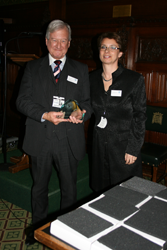 On 11 March 2010, the National Association of Licensed Paralegals held a special event at the House of Commons to mark their 23rd anniversary and to present awards to their highest achieving Students of the year. Since 1987, the National Association of Licensed Paralegals has dedicated itself to the promoting the status of Paralegals and paralegal training in the United Kingdom and abroad. NALP is recognised as an awarding organisation by Ofqual, the regulator of qualifications in England, and has accredited our courses.
 We are delighted to have received a record number of enrolments for our
  This time last year I did some voluntary work for El Shaddai children’s charity in India and I would like to give you an update to how my fundraising has progressed over the past year. El Shaddai provide orphans, street, slum, abused and sick children with the basic necessities of life. The care the children receive develops their personalities and helps them to have a brighter future. El Shaddai’s slogan is ‘Let there be no child on the streets without a proper childhood and they need help to fulfill their dream.'