

The Burden of Proof in English Law
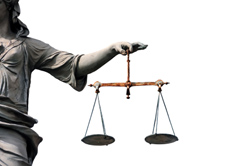 If you are studying through the Institute of Legal Secretaries and PAs, you will learn that the burden of proof in Criminal Law cases is set considerably higher than in other areas of law. In fact, there is a requirement for the Crown to prove a case against the defendant beyond all reasonable doubt.
In contrast, with civil cases, which make up the vast majority of legal cases and work dealt with in England, the burden is on the claimant to prove his or her case on the balance of probabilities.
 In days of yore it was so much simpler – you were either married or you weren’t. The sanctity of marriage was the norm. You reached, say, your late teens or early twenties, you got engaged, and then you were married; whether you lived happily ever after was another matter. In those days, in both a sociological and a legal way, marriage was to be supported, and it was. Socially, marriage was the way in which families were created and fostered; consequently, the legal idea was that the sanctity of marriage had to be protected.
 It is important to note that there have been a few changes to the structure of the civil courts system in England and Wales over the past 10 years or so, the most important of which occurred at the very top of this hierarchical chain with a change in name from the House of Lords to the Supreme Court. Also, there have been a few changes to the Family Court that primarily derived from Part II of the Crime and Courts Act 2013.
 As of July 2016, the old CON29R form was replaced by the new CON29. But what is the difference between the two forms, and what does it mean for those who are using them? There is certainly a wealth of information that anyone working with the CON29R should be familiar with – especially when considering there are thirty more questions on the new form!
  If the vast majority of people were asked whether or not a formal contract could be amended simply by way of an oral agreement, they would probably reply with an emphatic “no”. After all, most people who do not claim to hold any legal knowledge will have heard that an oral contract is not worth the paper it’s written on. However, those of us who understand the basics of this law of obligation may well come to a different conclusion.
 This month we will be considering the highly publicised case of Wright v Wright [2015] EWCA Civ 2015. Controversial comments made by Lord Justice Pitchford in the case suggested that the court’s approach would now favour, more than ever, the granting of temporary maintenance orders rather than orders that give an income for life. Before we look at the Wright case in detail we will first review the principles of maintenance and clean break orders.
 Earlier this month, a judgment by Mr Justice Edwards-Stuart in the Technology and Construction Court attracted a lot of attention because of the learned judge’s comments about what he saw as the poor preparation of the trial bundles. In fact, he considered that the problems of the bundles were so acute that he adjourned two parts of a three-part application, and ordered that the costs of the adjournment as well as the costs of repaginating the defective bundle should be paid by the firm which had originally submitted it. In other words, it was a fairly expensive mistake.
  New data protection laws are coming into effect across the EU this spring, and they’re set to be some of the most stringent in the world.
 Vicarious simply means ‘in place of’. Vicarious liability is a legal term that refers to a kind of secondary accountability. In other words, Person A is responsible for the wrongdoings of Person B, even though Person A had no direct involvement in the offence.
  Aside from the death of a loved one, divorce can be, and often is, one of the most stressful of all life’s events. It is rarely amicable, and one partner is usually hurting more than the other one. One of the biggest upsets with divorce can be the one-to-one confrontations in solicitors’ offices. These formal-type meetings tend to do more harm than good in a lot of cases. Well, what if you could cut out all those unpleasant face-to-face appointments with the future ex. Imagine if you could settle your divorce online with just a few clicks. The good news is that this will be a real option in the not-too-distant future. The online ‘digital’ divorce could become a reality as early as 2017. Legal experts expect this to be a preferred method among many divorcing couples, though not everyone welcomes the idea.